
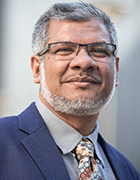
Kashem Muttaqi
University of Wollongong, Australia
Bio: Professor Kashem Muttaqi is the Director of the Australian Research Council Industrial Transformation Training Centre in Energy Technologies for Future Grids in Australia. He is also the Director of the Australian Power and Energy Research Institute (APERI) at the University of Wollongong, Australia. He is a Distinguished Professor and Discipline Leader – Electrical Engineering at the School of Engineering, University of Wollongong.
Professor Muttaqi received the B.Sc. degree in electrical and electronic engineering from Bangladesh University of Engineering and Technology in 1993, the M.Eng.Sc. degree in electrical engineering from the University of Malaya, Malaysia in 1996 and the Ph.D. degree in Electrical Engineering from the Multimedia University, Malaysia in 2001. Professor Muttaqi has 30 years of academic experience and authored or co-authored more than 600 papers in international journals and conference proceedings. He has supervised around 35 higher-degree research students to completion. He has attracted more than $60 million research fundings.
Professor Muttaqi is the Editor-in-Chief of the IEEE Transactions on Industry Applications. He was an Executive Board Member of the IEEE Industry Applications Society (IAS). He is a Fellow of the Institute of Electrical and Electronics Engineers (IEEE), USA. He is a Fellow of the Institution of Engineering and Technology (IET), UK. He is also a Fellow of the Institution of Engineers Australia.
Kashem Muttaqi's Keynote Speech Information
Abstract: The rapid growth of renewable energy is transforming modern power systems into highly dynamic, converter-dominated networks with increasing operational complexity. Although substantial infrastructure already exists within today's power grids, much of its operational flexibility and transfer capability remains underutilised due to conservative operating practices, limited real-time visibility, and ageing system architectures. This presentation will examine emerging approaches for improving the flexibility, controllability, and operational efficiency of existing electricity networks to support higher renewable energy penetration without extensive infrastructure expansion. The talk will discuss the role of advanced power electronic technologies, grid-forming converters, energy storage systems, digital substations, and intelligent monitoring platforms in enabling adaptive and resilient grid operation. In addition, advanced optimisation, coordinated control, and market-responsive operational strategies for dynamic power flow management, voltage regulation, and system stability enhancement will be explored. The presentation will provide perspectives on how future power grids can evolve into intelligent, highly flexible, and renewable-ready energy infrastructures capable of supporting secure, reliable, and low-carbon electricity systems.
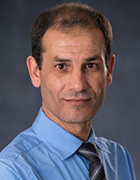
S. A. Saleh
University of New Brunswick, Canada
Bio: S. A. Saleh (IEEE Fellow) received the B.Sc. degree in electrical engineering from Bir Ziet University, West Bank, Palestine, in 1996, and the M.Eng. and Ph.D. degrees in electrical engineering from the Memorial University of Newfoundland, St. John's, NL, Canada, in 2003 and 2007, respectively, with a scholarship from the Natural Sciences and Engineering Research Council of Canada (NSERC). In 2007, he joined Memorial University of Newfoundland until 2011. Currently, he is a Professor with the Department of Electrical and Computer Engineering, University of New Brunswick, Fredericton, New Brunswick, Canada. His research interests include power system operation, control, and protection, digital protection of energy conversion systems, power electronic converter design, analysis, operation, and control, renewable energy systems, motor drives, and digital signal processing applications in power systems, power electronic converters and motor drives. He is a registered Professional Engineer in Canada. Dr. Saleh is a recipient of several national and international awards.
S. A. Saleh's Keynote Speech Information
Abstract: The design and selection of a grounding system are of a critical importance for the stability and functionality of power systems, including industrial and commercial power systems. These key aspects of grounding systems are subject of various standards, industrial codes, and recommended practices. In this presentation, a review of conventional grounding system designs is provided, along with the major limitations and challenges facing these grounding systems. The presentation will also provide insights into new designs of grounding systems that are developed to overcome the limitations of conventional grounding systems. The frequency-selective and solid-state grounding systems will be presented with potential applications in power systems. The presentation will provide test case results, together with an outlook for future trends of new grounding system designs.
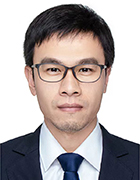
Junyu Liang
CSG Electric Power Research Institute, China
Bio: Liang Junyu, PhD, Professorate Senior Engineer, Level-3 Leading Professional and Technical Expert
He has long been engaged in the research of simulation and control testing in the field of automation. As a core member, he has undertaken three major research projects, including energy conservation and supply-demand interaction of high-energy-consuming industries, and multi-agent game theory of virtual power plants. He has realized flexible control of industrial loads and aggregated control of virtual power plants, and made research achievements in the identification of industrial flexible regulation boundaries and regulation capacity, as well as the autonomous control of distributed photovoltaic power.
He has won 2 Provincial and Ministerial Second Prizes, 1 Grid-level First Prize and 2 Company-level Awards. He has participated in the compilation of 1 national standard, 2 enterprise standards and 2 association standards. He holds more than 30 authorized invention patents and has published over 10 SCI/EI indexed papers. He currently serves as a member of the Standardization Working Group on Demand Side and Power Trading of China Southern Power Grid, and has been selected into the Young Top-notch Talent Program of Yunnan High-level Talent Plan.
Junyu Liang's Keynote Speech Information
Abstract: This presentation systematically elaborates a technical framework for the dispatch of load-side flexible resources in new power systems with high shares of renewable energy. The core research revolves around three directions:
First, the development and adaptive evolution of digital twins for multi-type loads via a physics-data hybrid-driven approach. This enables hierarchical aggregation across multiple voltage levels—from industrial production lines and commercial buildings to residential users—establishing cross-spatiotemporal dynamic reconfiguration linkages. The result is a precise measurement of adjustability and dynamic resource pool management adaptable to multiple market scenarios, including electricity spot markets, ancillary services, and demand response.
Second, emergency load control for extreme contingency scenarios. This involves constructing classification profiles of emergency load resources covering users listed in the over-plan and emergency curtailment priority tables, developing boundary assessment methodologies for dispatch constraints, and establishing a group-control closed-loop execution mechanism. By integrating adjustable loads into the power grid's "four lines of defense" security framework, the system achieves precise emergency control through coordinated dispatch and demand-side load control.
Third, the large-scale integration of new-energy heavy-duty trucks in Yunnan Province. Addressing the distribution network hosting capacity constraints posed by MW-level charging surges, the research proposes load profiling methodologies for heavy-duty truck charging station clusters, alongside flexible dispatch and market mechanisms encompassing capacity verification, coordinated charging, PV-storage-charging-swapping integration, and VPP aggregation and trading.
The presentation delivers a comprehensive technical pathway spanning resource cognition, boundary assessment, strategy generation, and engineering deployment, providing a systematic solution to render load-side resources manageable, controllable, deployable, and verifiable in new power systems.
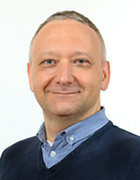
Peter Tamas Szemes
University of Debrecen, Hungary
Bio: Peter Tamas Szemes, PhD, is a researcher at the University of Debrecen, Hungary. He received his MSc degree in Mechanical Engineering, specializing in mechatronics and applied mathematics, from the Budapest University of Technology and Economics in 2000, and his PhD degree in Robotics from the University of Tokyo in 2005.
His research focuses on electric vehicle modeling and design, real-time traction performance monitoring, electrical machines and drives, industrial automation, embedded systems, and automotive battery systems. He is a nationally certified expert in automotive high-voltage and battery systems and a BMW-certified Level 3 High Voltage Expert.
He has authored or co-authored 165 scientific publications, including 64 journal articles, with 640 citations and an h-index of 14. His work has been published in leading journals, including IEEE Transactions on Instrumentation and Measurement, Energy Conversion and Management: X, IEEE Access, Energies, and Results in Engineering.
Junyu Liang's Keynote Speech Information
Abstract: Modelling is fundamental and often the initial step for microgrid system design. The topics of model complexity, computation resources, uncertainties, and performance validation methods generate contradictory conditions.
The topics should be introduced in the early stage of engineering undergraduate education because the sustainable future requires engineers to create and operate adaptive, reliable, and ecologically viable microgrid solutions. Different modelling methodologies and tools could be required for undergraduate, graduate and PhD level for quality human resource output. New research facility, Vehicle Research Laboratory, has been established at University of Debrecen to address the challenges for education. The facility can be operated as a microgrid, and students can have a hands-on experiment for quality and industrial oriented education.
In this presentation the theoretical and practical main challenges will be identified and solutions will be suggested.