Organizers & Sponsors
Sponsored by


Organized by








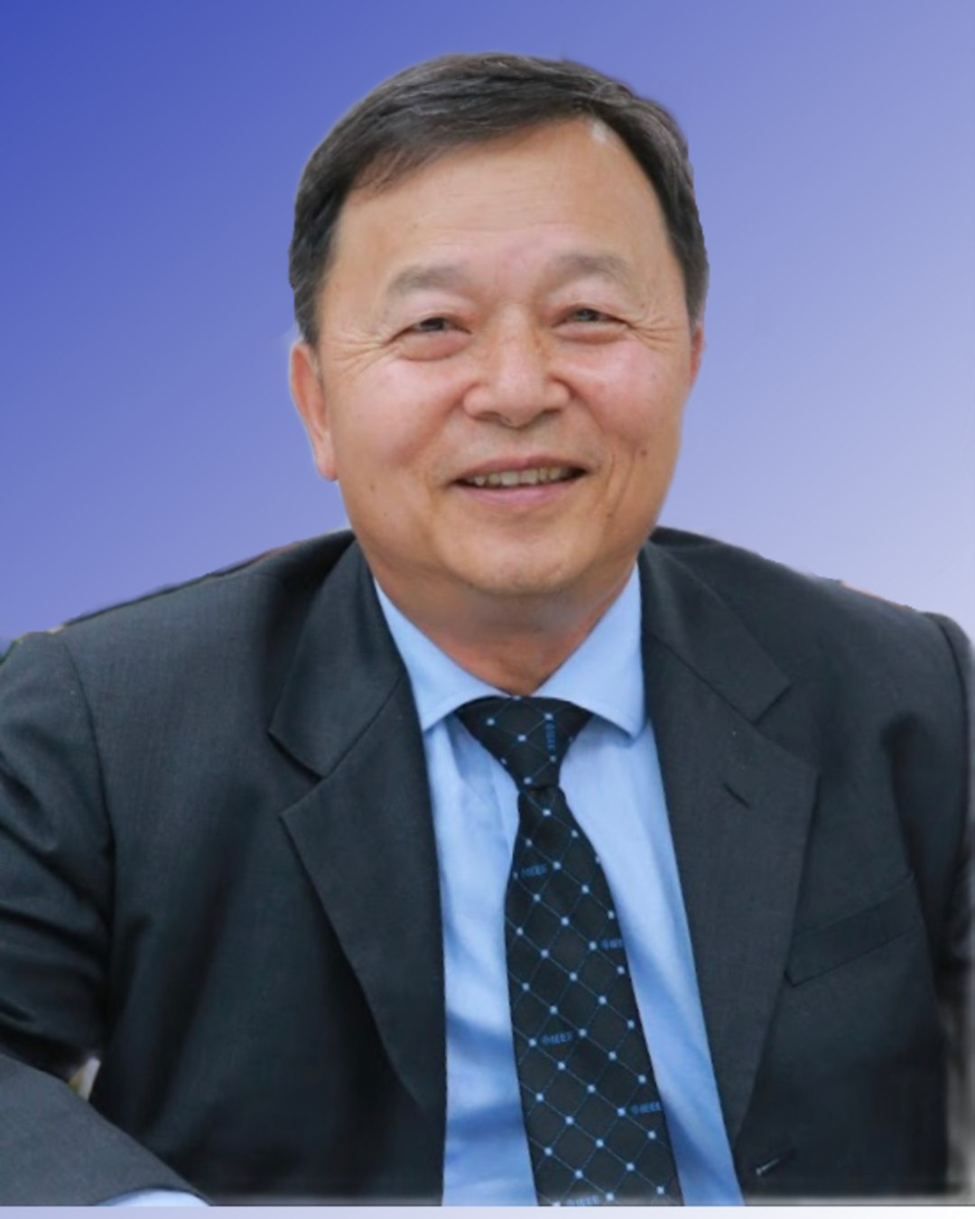
Professor Lee received the BS and MS degrees from National Taiwan University, Taipei, Taiwan and the PhD degree from the University of Texas, Arlington, in 1978, 1980, and 1985, respectively, all in Electrical Engineering.
In 1986, he joined the University of Texas at Arlington, where he is currently a professor of the Electrical Engineering Department and the director of the Energy Systems Research Center.
He has been involved in the revision of IEEE Std. 141, 339, 551, 739, 1584, 3002.8, and 3002.9. He is the President of the IEEE Industry Application Society (2021-2022), a Prominent Lecturer (PL) of IEEE IAS (2019-2021), and an editor of IEEE Transactions on Industry Applications and IAS Magazine. He is the project manager of IEEE/NFPA Collaboration on Arc Flash Phenomena Research Project.
Prof. Lee has been involved in research on Utility Deregulation, Renewable Energy, Arc Flash Hazards and Electrical Safety, Smart Grid, MicroGrid, Industrial Internet of Things (IIoT) and Virtual Power Plants (VPP), AI for Load, Price, and Wind Capacity Forecasting, Power Quality, Distribution Automation, Demand Response, Power Systems Analysis, Short Circuit Analysis and Relay Coordination, Distributed Energy Resources, Energy Storage System, PEV Charging Infrastructure Design, AMI and Big Data, On Line Real Time Equipment Diagnostic and Prognostic System, and Microcomputer Based Instrument for Power Systems Monitoring, Measurement, Control, and Protection. He has served as the primary investigator (PI) or Co-PI of over one hundred funded research projects. He has published more than one hundred and ninety journal papers and three hundred conference proceedings. He has provided on-site training courses for power engineers in Panama, China, Taiwan, Korea, Saudi Arabia, Thailand, and Singapore. He has refereed numerous technical papers for IEEE, IET, and other professional organizations.
Prof. Lee is a Fellow of IEEE and registered Professional Engineer in the State of Texas.
Abstract: The severe winter storm that hit the US during the week of February 14, 2021 has wreaked havoc with the electric power generation and delivery system in the United States, putting large numbers of customers under rotating outage and extended power outage for many customers. The situation in the Electric Reliability Council of Texas (ERCOT) has been especially glaring and harsh. Large amount of gas fired units and renewable energy were offline and ERCOT has ordered rotating outage. The Settlement Point Prices (SPP) reached US$9000/MWH for an extended period.
This presentation introduces the ERCOT system, the structure of the deregulated market in ERCOT, the sequence of the event that has happened between February 14, 2021 and February 19, 2021, and possible measures to mitigate the impact to the customers.
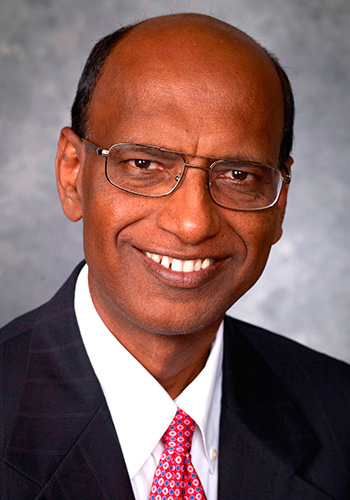
Kaushik Rajashekara received his PhD (1984) degree in Electrical Engineering from Indian Institute of Science. In 1989, he joined Delphi division of General Motors Corporation in Indianapolis, IN, USA as a staff project engineer. In Delphi and General Motors, he held various lead technical and managerial positions, and was a Technical Fellow and the Chief Scientist for developing electric machines, controllers, and power electronics systems for electric, hybrid, and fuel cell vehicle systems. In 2006, he joined Rolls-Royce Corporation as a Chief Technologist for More Electric architectures and power conversion/control technologies for aero, marine, defense, and energy applications. In August 2012, he joined as a Distinguished Professor of Engineering at the University of Texas at Dallas. Since September 2016, he is a Distinguished Professor of Engineering in University of Houston.
Prof. Rajashekara was elected as a Member of the National Academy of Engineering in 2012 for contributions to electric power conversion systems in transportation. He was also elected as 2015 Fellow of the National Academy of Inventors and 2013 Fellow of Indian National Academy of Engineering. He is the recipient of the IEEE Richard Harold Kaufmann award for outstanding contributions to the advancement of electrical systems in transportation; IEEE Industry Applications Society Outstanding Achievement Award, and EEE IAS Gerald Kliman award for contributions to the advancement of power conversion technologies through innovations and their applications to industry. He is a Distinguished Alumnus of Indian Institute of Science, Fellow of IEEE, and a Fellow of SAE International.
Prof. Rajashekara has published more than 160 papers in international journals and conferences. TX. He has published more than 160 papers. He has 35 U.S. and 10 foreign patents. He has given more than 150 invited presentations in international conferences and universities. He has co-authored one IEEE Press book on Sensorless Control of ac motor drives and contributed individual chapters to six published books. His research interests are in the area of power electronics, drives, transportation electrification, renewable energy, and energy management of microgrid systems
Abstract: Electric Vehicles, Hybrid Vehicles, Toyota Prius Operation, FUEL CELL VEHICLES, Electric Vehicle Charging, Power Electronics is the Enabling Technology for Transportation Electrification
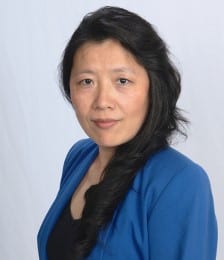
Dr. Jessica Bian is the President-Elect of the IEEE Power & Energy Society (PES). She is a visionary leader and architect, has spearheaded electric industry's reliability metrics and grid risk assessment. Currently she is the Vice President of Grid Services at Grid-X Partners. Before that, she was with the Federal Energy Regulatory Commission (FERC), Washington, DC. Previously, she was the Director of Performance Analysis at North American Electric Reliability Corporation (NERC) in Atlanta, Georgia. Under her leadership, a total of 18 industry-wide reliability indicators were established to determine grid reliability, adequacy, and associated risks. She is widely recognized as a pioneer and trusted world leader in the field.
Before joining NERC, Dr. Bian was with PJM, ERCOT and Westinghouse Electric. She earned her Bachelor degree in Electrical Engineering from the Taiyuan University of Technology, China; Master of Science from the Electric Power Research Institute, Beijing, China; and Ph.D. from Tulane University, New Orleans, Louisiana, USA. She was the PES Secretary from 2016 to 2019.
Abstract: TBA

Dr Chen has been the leader of Wind Power System Research program at the Department of Energy Technology, Aalborg University. His main research interests are power electronics, power systems, energy systems and new energy technologies. He has led and participated in many research and industrial projects, and he has more than 800 publications in these fields.
Professor Chen has served as a panel member and/or an evaluator for research funding organizations in many countries. He is an Associate Editor of the IEEE Transactions on Power Electronics, a member of editorial boards for a number of international scientific and technical journals.
Dr Chen is a Chartered Engineer in the U.K., a Fellow IEEE (FIEEE), a Fellow of IET (FIET), a member of the Danish Academy of Technical Sciences (ATV).
Abstract: Modern energy systems are in the transition towards a renewable energy based clean energy system. Green power plants based on variable renewable energy sources, wind and solar PV, have been quickly developed and would become the important energy sources of the energy systems, even dominated power sources in some countries/regions for example, in Denmark. These modern renewable power plants have distinctive features from the traditional fossil fuel based power source, synchronous generators, which bring many challenges to the operators of energy systems.
The speech will overview the development of renewable energy technologies, the wind and solar PV power plants, describe some major types of power electronic interfaces, main features of variable renewable power plants, and discuss the major challenges and possible solutions.
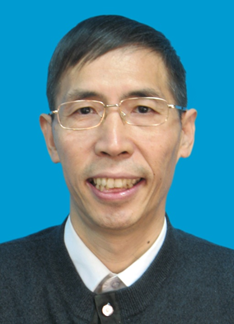
He was born in Zhouzhi county of Shanxi province, china in 1963 and received Ph.D. degree. from Xi'an Jiao Tong University 1996 and Post-Doctor from Tianjin University in 1999 in china.
Now he is a professor with Dept of EE, Tsinghua University, China. He is also IEEE Fellow, IET Fellow, Fellow of CSEE, Trustee of CES, Member of the technical committee of Cigre China, Chairman of PSRC of IEEE China, Member of the technical committee of Cired China, Convener of Cigre B5 WG55, Member of IEEE PSRC Fellow WG. He mainly engaged in electric power system fault analysis and protection Teaching and Research, and the major research area are as follows: Traveling waves-based protection, Travelling waves-based -fault location, Traveling waves-based-line selection, Non-communication protection, UHV transmission line's protection, Intelligent substation, System protection, Application research on wavelet transform.
He is the winner of the Second National Innovation Competition Award; He two times got State Technological Invention Award of Chinese government, 2nd Prize respectively in 2007 and 2017; He also got 2016 Cigre Distinguished Member Award and 2017 China Power Science and Technology Outstanding Contribution Award; He is also Chinese Most Cited Researchers from Elsevier.
Abstract: The zero carbon grid, which is centered on renewable energy generation, is coming to us. There is no doubt that this is the future of the energy and power industry. But the zero carbon power grid faces great challenges in the safe and stable operation, which is mainly manifested in: intermittent fluctuation of renewable energy generation causes the uncertainty of power supply, and causes the frequency, voltage to fluctuate greatly until it can not operate stably; Because new energy generation is connected to AC power grid through inverter, the increasing proportion of DC transmission in the grid, the risk of power outage in the whole network is increasing due to the cascading failure of AC DC hybrid grid, which becomes the biggest security threat to the operation of the power grid. The report analyzes the security challenges faced by zero carbon power grid, and then puts forward the technical countermeasures for developing energy storage technology and building system protection.
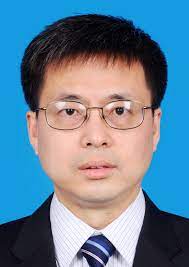
Prof. Jizhong Zhu received the B.S. degree, M.S. degree and Ph.D. degree in electrical engineering from Chongqing University in 1985, 1987, and Feb. 1990, respectively. Dr. Zhu was a professor in Chongqing University. He won seven provincial and ministerial awards for scientific and technological progress, and was selected as one of four outstanding young scientists working in China by The Royal Society of UK and China Science & Technology Association and awarded Royal Society Fellowship in 1994, as well as the national research prize "Fok Ying-Tung Excellent Young Teacher Medal" in 1996. He worked in a variety of places all over the world, including Chongqing University in China, Brunel University in UK, National University of Singapore, Howard University in USA, and ALSTOM Grid Inc., China Southern Power Grid and South China University of Technology (SCUT).
He is currently a Professor and director of ISESOOC center in SCUT and National Distinguished Expert in China. He is Chair of IEEE P2781 and P2783 Standard working groups since 2018, core member of IEEE PES SBLC Technical Committee, member of IEEE SMC Technical Committee on intelligent power and energy systems, and member of IEEE SMC Standard Committee, as well as was Chair of IEEE PES SBLC Loads Subcommittee during 2017-2019. He worked at ALSTOM Grid as a Senior Principal Power Systems Engineer and Senior Expert during 2000-2015, and became a Fellow of Alstom Expert Committee in 2013.
His research interest is integrated smart energy system optimal operation and control (ISESOOC), as well as smart grid and renewable energy applications. He has published six books as a sole author, and published over 200 papers in the international journals and conferences.
Abstract: This presentation introduces the definition, scope, operation objectives and technologies of smart grid (SG). The SG technologies include: Integrated communications, Sensing and measurement technologies, Advanced components, Advanced control methods, and Improved interfaces and decision support. These new technologies speed up the development of smart grid in modern power system. Robust smart grid is promoting large scale of application of renewable energies. In addition, the relationship of smart grid and energy internet is analyzed, and their application scenarios are discussed. Finally, this topic will address the application of smart grid on the areas of smart microgrid, electric vehicles and energy storages.
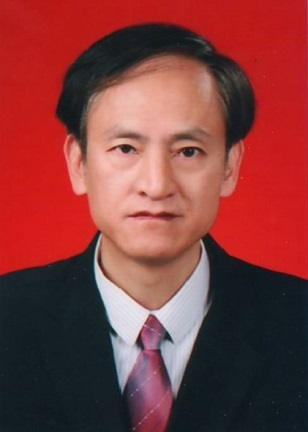
Prof. Zhang was born in Nanjing, China. He obtained his BA, MS and PhD degrees from Harbin Institute of Technology (HIT), Navy Aeronautical Engineering Academy (NAEA) and Hong Kong Polytechnic University (HKPU), respectively. After some years experiences of research working as a JSPS Research Fellow in Kumamoto University, Japan, as a consultant engineer at IREQ and professor in Canada, respectively. Currently he is a professor at Nanjing University of Aeronautics and Astronautics, and he had experienced 5-years as a chief expert at State Grid EPRI, China, his research interests are in high voltage engineering, electrical discharges, pulsed power & plasma application, renewable energy and the condition monitoring of electric power equipment.
Abstract: The energy consumption of buildings accounts for approximately 40% of the total energy consumption. Accurate analysis of the energy consumption of buildings not only promises significant energy savings but also helps to more accurately estimate the demand response potential and consequently brings benefits to the upstream power grid. This paper will focus on integrated energy service technology for intelligent park. Application forms of building energy analysis in areas such as energy efficiency promotion, electricity safety, user behavior analysis, and grid interaction will be discussed. This has great significance for the construction of integrated energy service system centered on residents or load aggregators. This paper proposes a novel physical-data fusion method for modeling smart buildings that can achieve an accurate assessment of energy consumption. The thermal process model of buildings and the electrical load model focusing on building heating, ventilation, and air conditioning (HVAC) systems are presented to analyze the thermal electrical conversion process of building energy consumption. The physical-data fusion method is used to improve the accuracy of the energy consumption analysis model of buildings, including modifying the parameters that are difficult to measure in the physical model, effectively modifying the electrical load model based on the proposed physical-data fusion method. Finally, the author will take an actual intelligent park in Jiangsu Province, China, as an example to introduce the research work of their team and the outlook for the future.
Can Wan received the B.Eng. degree from Zhejiang University, Hangzhou, China, in 2008, and the Ph.D. degree from The Hong Kong Polytechnic University, Hong Kong, in 2015.
He serves as a Professor with the College of Electrical Engineering, Zhejiang University, Hangzhou, China. He was a Postdoctoral Fellow with the Department of Electrical Engineering, Tsinghua University, Beijing, China, and held research positions with the Technical University of Denmark, The Hong Kong Polytechnic University, and City University of Hong Kong. He was a Visiting Scholar with the Center for Electric Power and Energy, Technical University of Denmark, and Argonne National Laboratory, Lemont, IL, USA. His research interests include forecasting, renewable energy, active distribution network, integrated energy systems, and machine learning. He is an Associate Editor for the IEEE Transactions on Industrial Applications and the IEEE Systems Journal.
Abstract: Accurate and reliable forecasting of renewable energy generation is essential to modern power system operation and control. Probabilistic forecasting becomes an effective tool for prediction uncertainty quantification in modern power systems with high penetration of renewable energy. This talk would give an overview of the development of renewable energy and the basics of probabilistic forecasting. A series of machine learning based probabilistic renewable energy forecasting methodologies would be introduced. With the aid of prediction intervals of renewable energy generation, the operating reserves of power systems could be optimally quantified. Numerical experiments demonstrate that the proposed probabilistic forecasting methodologies are effective for uncertainty quantification and could promisingly facilitate the integration of renewable energy.
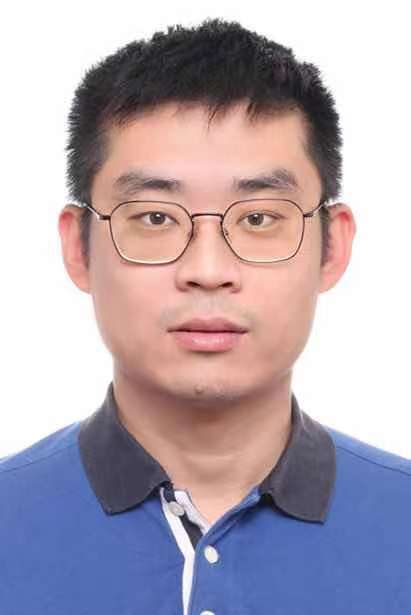
Xiaoguang Wang is a Professor at the Department of New Energy Engineering, College of Energy, Chengdu University of Technology, China. He received his Bachelor degree (2010) in Petroleum Engineering from China University of Petroleum (East China) and Master degree (2012) in Petroleum Engineering from University of Oklahoma, USA, and obtained his PhD degree (2016) in Hydrogeology from Imperial College London, UK. Prior to joining Chengdu University of Technology in 2020, he worked as a Postdoc and then Research Scientist in Hydrogeology at Laboratoire Hydrosciences, Montpellier, France.
Professor Wang’s research interests are in coupled THMC processes in fractured rocks with many applications including contaminant transport, geothermal engineering, oil and gas recovery, geological carbon storage. He has over 40 scientific publications and is a selected candidate of the E’mei Scholars Program of Sichuan Province.
Abstract: Geothermal energy is a competitive clean and renewable resource, which is abundant and widely distributed in China. The development of geothermal energy can reduce pressure on energy demand and further promote the process of carbon neutrality in China. However, several key technologies on geothermal resource exploration, evaluation and utilization are required for the efficient development of geothermal energy, which are lagged behind other countries. Based on the Geothermal Research Center in Chengdu University of Technology, we developed some advanced technologies, including THMC coupled simulation techniques, inverse modeling, monitoring and real-time optimization systems, which will be thoroughly introduced in the presentation.
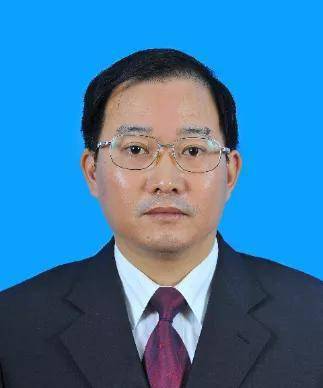
Dr. Han is an expert in smart grid. He received the Ph.D. degree in Electrical Engineering from Zhejiang University in 1995. Now he is professor level senior engineer, deputy chief engineer and postdoctoral supervisor of the State Grid Sichuan Electric Power Company. He is the head of the CIGRE C4.45 China working group and the domestic expert group of State Grid Corporation. He has been engaged in power grid construction, operation, production, management and scientific research for a long time. His achievements have awarded by Chinese Society for Electrical Engineering, Sichuan Province, State Grid Corporation and so on. And, the power grid construction project he participated in has won gold prize of national high quality projects. He has published more than 30 scientific papers and 2 monographs.
Abstract: To address the security, stability and scheduling problems of the complementary generation of cascaded small-hydropower and photovoltaic in the basin, the complementary generation technology of the cascaded hydropower-PV-storage system closely combines cascaded small-hydropower, photovoltaic and pumped hydro storage, and fully exploits the regulation capacity of cascade small-hydropower to realize the complementary optimization of various renewable energy sources. In this project, the multi time scale coupling stochastic optimization and control theory of cascade small-hydropower and photovoltaic system is constructed. Besides, a series of software for planning, operation, control and dispatching of the system is developed. In the end, the key technologies such as design and manufacturing of complete sets of equipment for full power variable speed constant frequency pumped hydro storage units are conquered. The project is being carried out in Xiaojin, Sichuan, China to validate the feasibility of the proposed technology.
Sponsored by
Organized by